
History of Trentemoult

Bathers in the Loire at Trentemoult, around 1900.
Unknown author, around 1900 – public domain, via Wikimedia CommonsBefore it was the colourful village you reach by Navibus, Trentemoult was an island in the Loire, home to fishermen, then to deep-sea captains and Cape Horners. Floods, river crossings, festivals, narrow lanes and exotic gardens: here is its history, told simply, with themed pages and three walks to see it on the ground.
- The timeline800 years, one date at a time.
- The quays walkAbout 1 h 30, from the Navibus to the Belem.
- The filmShot in the streets of the village.
Explore by theme
 Sailors and Cape HornersCabin boys, captains, and those who rounded Cape Horn.
 Loire fishermenSeine nets, shad, eels and glass eels.
 Floods and the SeilWhen the streets turned into canals.
 From the Roquios to the Navibus1887 to 1958, then the Navibus in 2005.
 Houses and coloursFive kinds of house, and the real story of the colours.
 Remarkable placesThe Pendule, the Sailors’ Virgin, the harbour, the Cour du Miracle.
 Shops of the pastTwelve cafés, ten grocers, and the shopfronts that remain.
- Festivals, regattas, carnivalRegattas, swimming and carnival floats.
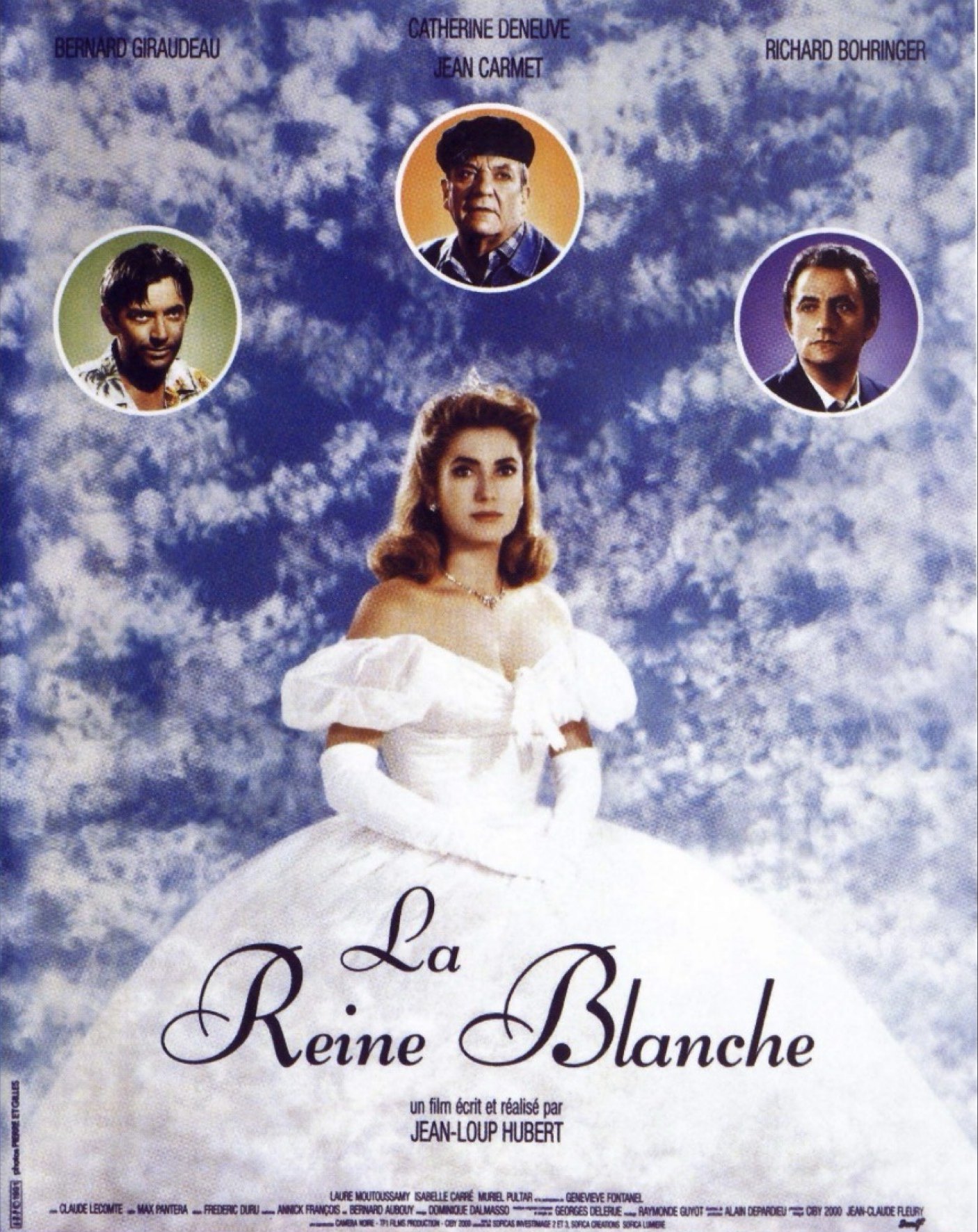 La Reine BlancheThe 1991 film, and what it left in the streets.
 People of the villageSailors, artists, resistance fighters, and the women of the neighbourhood.
Historical walks
 From the quays to the BelemAbout 1 h 30, from the Navibus to the memory of the Belem.
 Captains and utopiasCaptains’ houses, the sailors’ monument, studios.
 Walk 3: shops of the pastShopfronts on quai Surcouf, quai Boissard and rue Barban.
- From Trentemoult to Saint-LupienThe walk already on the site, on to the Roman town.
Timeline
- Époque gallo-romaine – A branch of the Loire ran past Ratiatum, the ancestor of Rezé; goods were transferred and boats built there.
- 1285 – Olive, widow of Guillaume Mathieu de l’Isle, gives part of the île des Chevaliers (Haute-Île and Basse-Île, upstream of Trentemoult) to the Templars.
- XIVe siècle – The islands of Trentemoult, Norkiouse, Basse-Île and Haute-Île begin to fill with people.
- 1397 – John IV grants the islands of Rezé (including Trentemoult), Bouguenais and Sainte-Croix a monopoly on seine fishing in the Loire.
- XVIe–XVIIe s. – Building the quai de la Fosse in Nantes pushes the fishermen out to the islands of Rezé.
- 1726 – A royal order asks captains to bring back plants and seeds: the start of the exotic gardens.
- 1791 – The first public ferry across the Loire.
- Années 1820 – “Rebel Trentemoult” rejects the mayor’s authority and more or less runs itself for about ten years.
- 1826 – 90% of the houses stand on an islet 350 m by 150 m.
- 1857-1858 – Two bridges finally join the village to the town: island life ends.
- 1865 – The Sailors’ Virgin is raised on quai Surcouf.
- 1866 – About 1,300 inhabitants; almost every household lives from the sea or the river.
- 1872, 1904, 1910, 1955 – The four great floods people still remember.
- 1883 – The first organised regattas; Trentemoult becomes a place for Nantes to come and play.
- 1887 – The “Roquios”, steam boats, link Trentemoult to Nantes.
- 1902 – Captain Julien Chauvelon and the Belem escape the eruption of Mount Pelée.
- 1912 – A yacht designed by Talma Bertrand, a son of the neighbourhood, wins Olympic gold in Stockholm.
- 1948 – Monument to sailors lost at sea, place Levoyer.
- 1958 – The Roquios stop running.
- Années 1960 – The Seil, a former branch of the Loire, is filled in.
- 1980 – The marina opens.
- 1986 – The Cap-Horniers building, by Dominique Perrault.
- 1991 – Release of the film La Reine Blanche, shot in the village.
- 1998 – A first house painted bright red starts the “colour revolution”.
- 2001 – The Maison des Isles opens.
- 2005 – The Navibus brings the crossing back.
- 2009 – Roman Signer’s Pendule (Estuaire) is installed facing the village.
Explore the archives
Postcard images from the Rezé municipal archives are not reproduced here: they are on their portal, or in the reading room. These are the doors in.
- The village of TrentemoultThe municipal archives’ page.
- PostcardsThe postcard collection, including the quays and the floods.
- Julien ChauvelonCaptain of the Belem.
- Cape Horners’ housesRue de la Californie and rue Roiné.
- Fishermen’s housesThe Loire islands.
- From the Roquio to the NavibusThe crossing, from the archives.
- Memories of La Reine BlancheThe shoot, and Mireille Joséphau.
- Yves MarionThe painter of the Cour du Miracle.
- 163 listed documentsFranceArchives inventory, mostly postcards (collection 5Fi).
- Visit the archivesHôtel Grignon-Dumoulin, place Jean-Baptiste-Daviais.
Sources: Rezé Histoire no. 97 (April 2026), “3 walks to understand Trentemoult”, Rezé Histoire association – rezehistoire.fr. Texts rewritten by trentemoult.com; for more, get the magazine.
Sources / Further reading
- Rezé municipal archives – heritage portal (old Trentemoult postcards: harbour, quay, landing stage, the floods of 1904 and 1910)
- The 1904 and 1910 floods at Trentemoult (search “flood”)
- Postcard “The landing stage flooded in 1910” (5FI/1/31)
- Postcard “A roquio leaving the landing stage” (5FI/1/59)
- Postcard “The quay and the harbour of Trentemoult” (1916, 5FI/2/12)
- Loire-Atlantique departmental archives – digitised records (Napoleonic cadastre of Rezé, civil registry)
- Rezé Histoire no. 97, the Trentemoult special issue.